


By Ahmet Salih Alacaci
WASHINGTON (AA) - As the sun begins to set in Silver Spring, Maryland, cars slowly fill the parking lot outside the Imaam Center.
Families arrive carrying trays of food. Volunteers move quickly between the kitchen and prayer hall. Inside, the smell of lentils and rice hangs in the air as worshippers gather, waiting for the moment they can break their fast.
Rows of dates are laid out. Children weave between tables. Plates are stacked, water cups lined up. Then, as the evening call to prayer signals sunset, the room falls briefly still, before the fast is broken and conversation returns.
Scenes like this play out every evening during Ramadan at mosques across the US. But beyond the shared meals and prayers, the holy month is also one of the most important periods of charitable giving for Muslims.
- A season of giving
For many, that generosity centers on zakat, a required form of almsgiving in which eligible Muslims donate 2.5% of their accumulated wealth to people in need.
While zakat can be given at any time, many choose to do so during Ramadan, when acts of charity are believed to carry greater spiritual reward.
Research from the Muslim Philanthropy Initiative at Indiana University's Lilly Family School of Philanthropy estimates that Muslim Americans contribute about $1.8 billion in zakat each year, with nearly 70% of that given during Ramadan.
In total, Muslim Americans donate around $4.3 billion annually to charitable causes, with about 85% of those contributions staying within the US, according to the research.
At mosques, that giving often takes simple, practical forms - meals for neighbors, food packages for struggling families, or financial help for those facing hardship.
At the Imaam Center, volunteers serve hundreds of people each evening through free iftar meals.
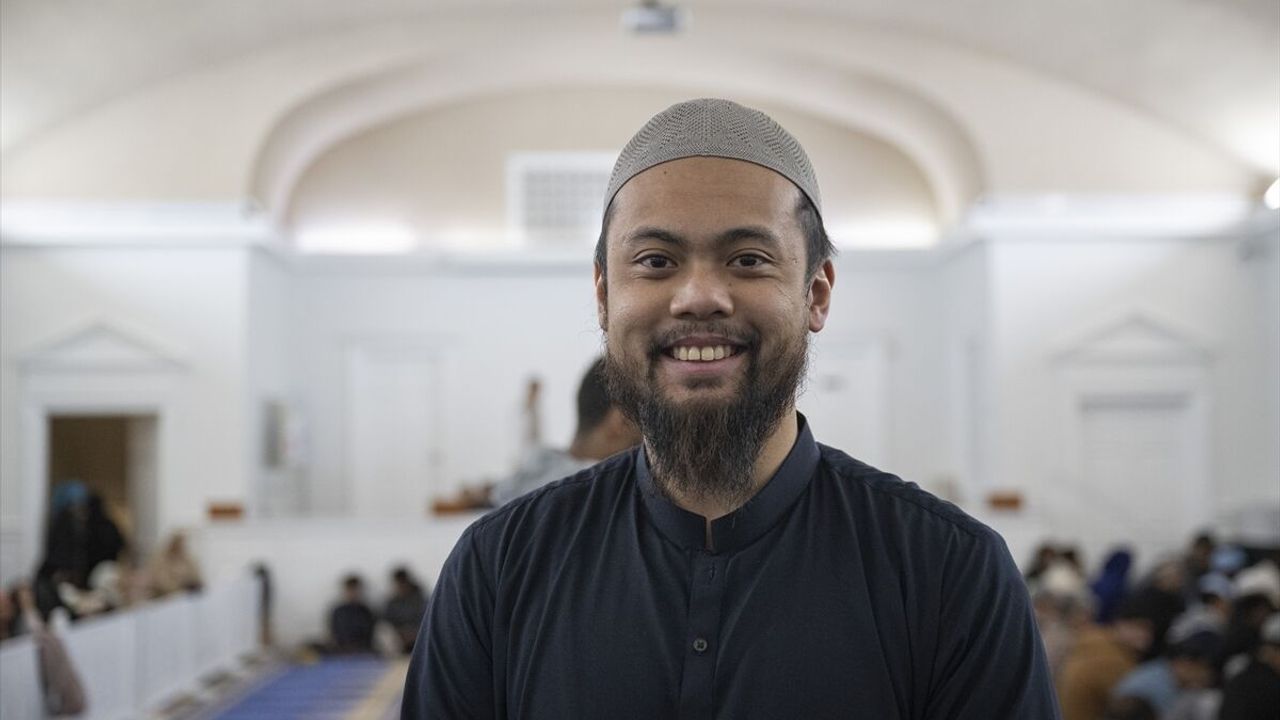
Ramadan is the busiest time of year for the mosque, according to Hadi, its operations manager.
'I make sure that the day-to-day operations here go smoothly,' he said. 'If there's any issue with the parking or lighting, the heater, anything - any issues that come up in the masjid (mosque) - I handle it.'
Each evening follows a familiar rhythm: sunset prayers, a shared meal, then night prayers later on.
'It's been busy,' Hadi said.
Preparing the meals is a community effort. The mosque hosts around 30 Quran study circles, known as halakat, whose members take turns cooking for the iftar.
For many Muslims living as a minority in the US, these gatherings offer something more than just food.
'In America, because we're a minority, the sense of family, unity, kinship, brotherhood, sisterhood, it's very close,' Hadi said. 'During Ramadan, it's the best time of the year, because people come to the masjid, eat together.'
- Meeting growing needs
As attendance rises during Ramadan, so too does the demand for help.
'A lot of people come to my office and ask for zakat,' Hadi said.
Many are newly arrived refugees or families struggling with the high cost of living in the Washington metropolitan area.
'Rent is very expensive here,' he said. 'A lot of the refugees, they get support for two or three months. After that, the government stops supporting with the rent.'
To help meet these needs, the mosque distributes donations collected throughout Ramadan and works with national charities to expand its reach.
Earlier this month, the center partnered with Islamic Relief USA to distribute more than 160 food packages, each containing staples such as lentils, cooking oil, tea and dates.

It also hosted a free health clinic, where volunteers carried out blood pressure checks and basic screenings.
Across the country, Muslim charities expand their services during Ramadan. Organizations such as ICNA Relief USA operate food banks, medical clinics and refugee support programs in dozens of states, serving people of all backgrounds.
At the Imaam Center, donations are also collected nightly during prayers to support families facing urgent needs.
Sometimes, those requests are immediate.
'This person came today, he said: 'I really need to pay my rent and I live with my aunt : I need your help,'' Hadi recalled. 'I said, 'I will call you when we approve your application,' and I told him, 'We got you.''
- A place to belong
Among those gathered at the mosque is Salman, who embraced Islam five years ago.
'In the beginning, I didn't know anything about Islam,' he said. 'I started looking at Islam by the character of the Muslim. Very nice people, very warm, very welcoming. They're not pushing you away.'
He said it was the sense of community that drew him in.
'(They would say) 'Brother, come eat with us : Be with us, brother,'' he said. 'It just put (in me) a love for Islam.'
Now, Ramadan has become a time of reflection and growth for Salman.
During the day, he works long hours as a sales associate while fasting, but he says the spiritual reward outweighs the challenge.
'Every Ramadan you learn something new about yourself,' he said. 'When we make an intention (in our heart), Allah makes it easy for us.'
- More than a meal
As the evening winds down, conversations soften and families begin to leave. Children linger in the prayer hall, while volunteers quietly clear tables and prepare for the next day.
Across the US, similar scenes unfold night after night during Ramadan, as mosques and community groups come together to support those in need.
For many Muslims, the month's emphasis on generosity is inseparable from faith itself - a reminder that devotion is measured not only in prayer, but also in care for others.
For Hadi, who grew up in Indonesia, the world's largest Muslim-majority country, that sense of community has taken on new meaning in the US.
'As a matter of fact, we got a collaboration offer from the church across the street,' he said.
'In Indonesia : you take things for granted. Here? We've got to be together, you know?'